The Quiet Protein: Reading a Takeaway Kitchen Through Its Tofu
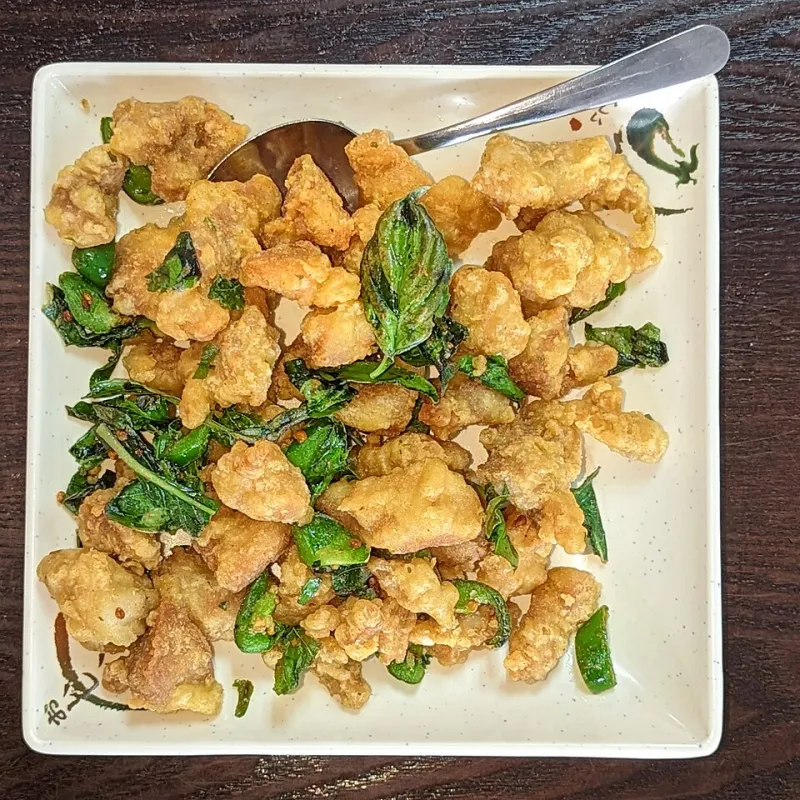
Photo: Daderot, CC0, via Wikimedia Commons
There is a corner of the average British Chinese takeaway menu where the pace drops. It sits between the spare ribs and the rice, usually under a heading like Vegetarian Dishes or Bean Curd, and it has barely changed in three decades: bean curd with mixed vegetables, bean curd with mushrooms, bean curd in black bean sauce, and — if you are lucky — something involving cashew nuts. Most people skip it. Anyone who cooks, or who has spent too long squinting at laminated menus, knows it is the most revealing page in the whole thing.
Because tofu is cheap, and tofu is honest. A chicken dish can hide behind batter, sugar and a glossy sauce. Bean curd cannot. It arrives as it is — pale, wobbly, faintly nutty — and every shortcut the kitchen has taken is visible in the first mouthful.
The substitution tell
The first thing to look for is how tofu is listed. If bean curd appears as its own dish, with its own sauce and its own name, the kitchen has thought about it. If it only ever appears in brackets — chicken or bean curd, beef or bean curd — then it is a swap, not a dish. That is not automatically bad; plenty of very good takeaways just do not see a vegetarian market worth chasing properly. But it tells you the tofu is being treated as an ingredient to be dropped into a sauce that was designed for something else, which is exactly how you end up with a sad grey cube sitting in a gravy that tastes of nothing in particular.
The middle ground is the section that lists six different bean curd dishes where the only difference is the sauce. That is a kitchen hedging its bets, and it is usually fine — but it does not tell you much. It is the presence of one specific, opinionated tofu dish that tells you the most.
Salt and pepper tofu is a fryer exam
If salt and pepper tofu is on the menu, order it. Not because it is fashionable — it has quietly become one of the most ordered starters in the country — but because it is almost impossible to fake.
Done properly, the cubes are firm enough to hold their shape, dusted in cornflour or potato starch, fried hot and fast so the outside goes crisp and faintly bubbled while the middle stays soft. The seasoning should be a proper scatter of salt, white pepper, chilli and garlic, not a sad pinch at the end. Done badly, you get greasy, pale blocks that have steamed themselves in a lukewarm fryer and a mouthful of raw starch.
And here is the useful bit: the fryer that turns out good salt and pepper tofu is the same fryer doing your chips and your spring rolls. If the tofu is crisp and dry, the chips will be too. If it arrives sweating in the foil, you have learned something about the whole order before the mains even turn up.
Ma po tofu, and the confidence question
Ma po tofu is the other great tell. Traditionally it is a Sichuan dish of soft bean curd simmered with minced beef or pork, chilli bean paste and ground Sichuan peppercorn — numbing, red, glossy with oil. On a British takeaway menu it usually turns up as something gentler: a browned, thickened sauce with minced beef and cubes of bean curd, sometimes mild, sometimes not.
Neither version is a con. British Chinese cooking has always adapted, and an anglicised ma po is a perfectly good dinner. But the choice a kitchen makes says a lot. A menu that offers a genuinely punchy, peppercorn-led ma po is telling you the chef knows the dish and trusts the customer to handle it. A menu whose ma po tastes identical to its chilli beef has told you tofu is there to bulk out the meat.
The vegetarian version is worth asking about directly. Classic ma po contains meat, so a veggie-friendly one is a genuine test of whether the kitchen cooks tofu as a main event — some do it with finely chopped mushroom and a properly fermented chilli paste, and it can be the best thing on the table.
Bean curd sheets: the menu's fingerprint
Then there are the quieter bean curd items — the ones that only appear in kitchens with a particular background. Bean curd rolls, bean curd skin, the Cantonese cold dish often called vegetarian goose, and the knots and sheets that turn up in hot pot sections. These are not menu filler. They take prep, they need a supplier who stocks them, and they suggest someone in the kitchen has trained somewhere that treats bean curd as a whole food group rather than a vegetarian afterthought.
If you see them on a suburban takeaway menu, alongside a proper dim sum list, it is usually a good sign. It is the same logic as a chippy offering roe: not for everyone, but a marker of a kitchen that knows its own tradition.
The texture problem
Most complaints about tofu come down to texture, and most texture problems come down to one thing: water. Bean curd is sold sitting in it, and a kitchen in a hurry will slice, sauce and serve without pressing or draining. The result is a dish that weeps into the sauce and tastes of the carton.
So look at the dish, not the label. Fried puffs should be spongy enough to soak up curry. Firm tofu in a stir-fry should hold an edge. Silken tofu in soup should be barely set. A kitchen that reaches for the right one every time is a kitchen paying attention.
How to test it without spending much
You do not need to build a whole order around this. Order a portion of salt and pepper tofu to share as a starter — it is usually one of the cheapest things on the menu — and see how it lands. Then pick a bean curd dish with a sauce you already know well, like black bean, so you can judge the tofu rather than the gravy. If ma po is listed, ask whether theirs is vegetarian, and take note of whether the person on the phone knows the answer straight away.
That is a fiver's worth of intelligence, and it will tell you more about the kitchen than a hundred five-star reviews. Tofu is not a loss leader and it is not a marketing exercise. Nobody is making money by doing it well. Which is exactly why, when a takeaway does, it is worth remembering.