The Green Lie in the Foil Tray: Britain’s Enduring Love for Takeaway ‘Seaweed’
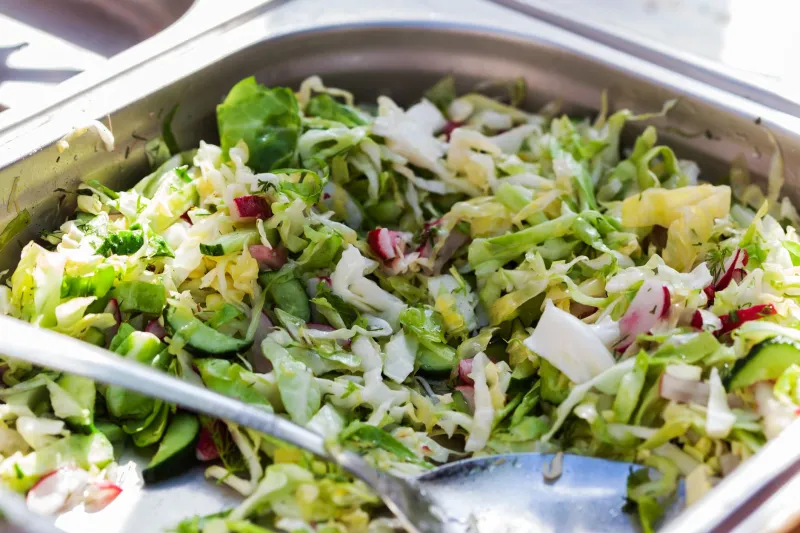
There are few sights more reassuring on a Friday night than a foil tray of dark green shreds, faintly sweet, deeply savoury, and roughly the texture of crisp autumn leaves. It arrives alongside the ribs, the prawn crackers and the inevitable carton of curry sauce. The menu calls it crispy seaweed. The tongue agrees. The brain, if it is paying attention, eventually asks a reasonable question: since when did seaweed grow in a cabbage patch?
A Side Dish Built on a Beautiful Misunderstanding
Crispy seaweed is one of the British Chinese takeaway’s most charming white lies. In the vast majority of cases, the green stuff in the tray is shredded cabbage, spring greens or kale — not seaweed at all. It is fried until it darkens and curls, then tossed with sugar, salt and sometimes a whisper of five-spice. The result is sweet, salty, faintly vegetal and dangerously easy to eat by the handful before the main event has even been unwrapped.
The dish belongs to the same broad family of British Chinese menu adaptations as curry sauce, salt and pepper chips and those bright pink spare ribs. It is not a faithful copy of a classic regional Chinese dish. It is a local invention, or at least a local reinvention, shaped by the ingredients British Chinese restaurants had to hand and the tastes their customers kept coming back for. Some accounts place its rise in the 1970s and 1980s, when Chinese takeaways across the UK were refining menus for local appetites. The exact origin is murky, which feels appropriate for a dish named after something it does not contain.
Why the Name Refused to Budge
You might think a dish made from cabbage would eventually be renamed. It has not been. ‘Crispy seaweed’ is too useful a phrase. It sounds lighter than ‘deep-fried shredded cabbage’, more exotic than ‘greens’, and just familiar enough that nobody feels tricked. The name also sets an expectation: crisp, salty, a little bit oceanic. The sugar and salt do the rest. Your palate fills in the gaps.
There is a practical side to this, too. Menus rely on shorthand. A takeaway customer scanning a long list does not necessarily want a botany lesson. ‘Crispy seaweed’ is a known quantity, a side order with a built-in reputation. It sits comfortably beside the other supporting acts — chips, crackers, spring rolls — and does not demand explanation. In a sense, the name is not a con. It is a menu alias, like ‘special fried rice’ or ‘house special’. Everyone knows what it means, even if nobody can quite justify the wording.
Restaurant Crunch Versus Home Crunch
In a restaurant kitchen, the method is built for speed and volume. Greens are shredded finely, dried well, and dropped into hot oil. They fry fast, sometimes in seconds, until the moisture is gone and the edges darken. The cook lifts them out, drains them, and seasons immediately with sugar and salt. Some kitchens add a little five-spice or a pinch of MSG. The aim is a light, almost weightless crunch that shatters between your fingers.
At home, you can get close, but you need to adjust your expectations. The biggest mistake is using wet greens. Water is the enemy of crispness. Shred cabbage or spring greens as finely as you can, then dry them thoroughly with a clean tea towel or a salad spinner. Kale works brilliantly — perhaps the closest home substitute — because it crisps reliably in an oven or air fryer. Toss it with a little oil, spread it out in a single layer, and bake at around 160°C until the edges are crisp but not black. Season straight away with a mix of caster sugar and fine salt, plus a tiny pinch of five-spice if you like.
Deep-frying gives the most authentic takeaway texture, but it is not essential. An air fryer or a hot oven will produce a very respectable version. Just keep the layers thin and watch the tray like a hawk. Greens go from crisp to carbonised faster than you would believe.
How to Order and Eat It
Crispy seaweed is a side, not a main, but it has a tendency to disappear first. Order it when you want something salty and sweet to break up the richness of a curry or the stickiness of ribs. It works particularly well with salt and pepper chips, though that is arguably gilding the lily. It is also good on top of rice, where the crunch contrasts nicely with the soft grains.
Eat it quickly. This is not a dish that improves with time. Steam from other containers will soften it, and a lid on a foil tray will turn it from crisp to chewy. If you are collecting a takeaway, keep the seaweed separate until you get home. If you are ordering delivery, accept that the crunch is a lottery. The flavour will still be there, even if the texture has surrendered.
The Charm of the White Lie
Crispy seaweed is not a deception worth getting worked up about. It is a useful, tasty side that has earned its place on British Chinese menus through sheer repetition and reliability. The name may be inaccurate, but the pleasure is real. It is the kind of dish that makes a takeaway feel complete: a little tray of green, a little hit of sugar and salt, a little crunch before the heavier stuff begins.
So the next time you see ‘crispy seaweed’ on a menu, you can smile at the absurdity of it. You are not eating the sea. You are eating cabbage, or kale, or spring greens, cleverly disguised and generously seasoned. And you are probably enjoying it more than you would enjoy actual seaweed. That is the British Chinese takeaway in a nutshell: adaptable, slightly mischievous, and all the better for not being entirely authentic.