Not Fake, Just Local: The Chinese Takeaway Dishes Britain Made Its Own

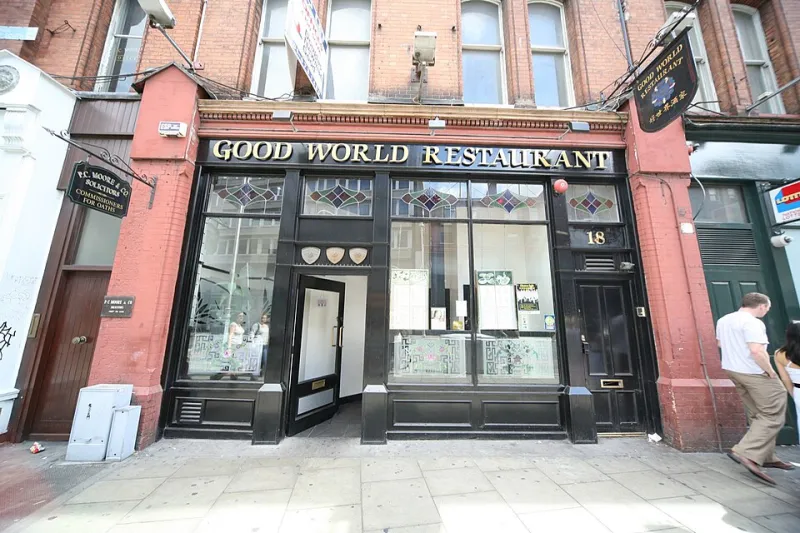
Photo: Stefan De Wit , CC BY-SA 2.0, via Wikimedia Commons
There’s a conversation that starts in every Chinese takeaway queue. Someone squints at the menu, points at Yung Chow or chop suey, and says: “That’s not real Chinese food, is it?” It’s meant as a gotcha. But it’s the wrong question. The UK Chinese takeaway menu is not a faded copy of a restaurant in Guangzhou. It’s a dialect. And dialects aren’t wrong versions of a language. They’re languages with their own grammar, their own habits and their own stubborn logic.
Authenticity is not a single passport
“Authentic” gets used like a bouncer at a club, deciding who gets in. But Chinese food is not one cuisine. It’s many regional traditions, with different ingredients, techniques and attitudes to sauce. When those traditions travelled to Britain, they didn’t arrive in a vacuum. They landed in a country with chip shops, curry powder, cabbage, frozen prawns and a serious appetite for something hot, salty and comforting after a long shift.
The dishes that came out of that meeting are not ancient. They are not from a single village. But they are not accidents either. They were cooked by real people for real customers, tweaked over years, and passed down through takeaway counters. That makes them a tradition, even if the tradition started in a kitchen above a shop rather than a palace.
Yung Chow: the name crossed, the recipe didn’t
Yung Chow fried rice is a good place to start, because it sounds like it should have a long family history. The name gestures towards Yangzhou, the Chinese city associated with a celebrated fried rice. But the Yung Chow on a British takeaway menu is its own thing: rice, egg, prawns, strips of char siu or chicken, maybe peas, spring onion, and a savoury gloss that varies from shop to shop. Ask ten takeaways for the recipe and you’ll get ten answers, plus a free bag of prawn crackers if you’re lucky.
That’s the point. The name travelled; the dish was renegotiated. Yangzhou fried rice has its own stories and variations, but it is not the same plate as the late-night Yung Chow special from a shop near a retail park. The British version is a house special: flexible, filling and built for a wok that’s already hot. It is no more a fake than a Birmingham balti is a fake curry. It’s a local answer to a local appetite.
Chop suey: the awkward transatlantic cousin
Chop suey is often the punchline in these arguments. It’s not a classic dish from a Chinese village, and it doesn’t pretend to be. Its strongest origin stories sit in Chinese-American communities in the nineteenth century, where cooks stir-fried odds and ends into a saucy, mild, bean-sprout-heavy dish for hungry customers. It crossed the Atlantic and found a place in British Chinese restaurants, then in takeaways, where it became a byword for the mild, gravy-ish end of the menu.
Is it Chinese? It’s Chinese diasporic. It’s a restaurant dish made by Chinese cooks, adapted for non-Chinese customers, and then loved by everyone. That’s not a scandal. That’s how food moves. The British chop suey — soft onions, bean sprouts, water chestnuts, a glossy sauce — is a cousin of the American original, not a direct descendant of a Cantonese home kitchen. It belongs to the story of Chinese migration, not to a myth of purity.
Curry sauce and chips: the British-Chinese handshake
Then there’s curry sauce. The bright yellow, onion-flecked sauce that arrives in a little tub next to your chips is not the same thing as the curry you’d get in an Indian restaurant, and it’s not trying to be. It’s a Chinese takeaway sauce: mild, sweet-savoury, thickened and built to coat. Its exact origins are argued over, but its job is clear. It turns chips into a meal and rice into a treat. It’s the bridge between the chip shop and the wok.
Chips themselves are about as British as it gets, but in a Chinese takeaway they become something else: salt and pepper chips, chips with curry sauce, chips under a pile of onions and peppers. This is not a Chinese dish that never crossed the sea. It’s a British dish that crossed the road. And that’s fine. The menu is not a museum. It’s a working kitchen.
Why the menu keeps them
Takeaway menus are not written by historians. They’re written by people trying to make a living, using ingredients that keep, cook fast and travel well. Yung Chow, chop suey, curry sauce and chips all do that. They’re forgiving. They scale. They survive a fifteen-minute moped ride. They also carry nostalgia: the Friday night order, the family argument over whether to get pancake rolls, the smell of the bag on the passenger seat.
In 2026, the argument about authenticity still rumbles, but the evidence is on the plate. These dishes are eaten across the UK, cooked by Chinese takeaway families, and ordered by customers who know exactly what they want. They’re not a failure to be Chinese. They’re a success at being British-Chinese.
A menu dialect worth defending
The next time someone says Yung Chow isn’t real Chinese food, agree with them — then order it anyway. It isn’t a dish from a Chinese province. It’s a dish from a British high street, with a Chinese name and a wok behind it. Chop suey is a transatlantic cousin. Curry sauce and chips are a handshake between two takeaway cultures. None of them needs a fake pedigree. They just need to be cooked well.
That’s the test. Not whether a dish can trace its family tree back to a specific region, but whether it tastes like it belongs. The British-Chinese menu is a dialect, and dialects are not lesser languages. They’re just spoken in a different place. Pass the curry sauce.