The Doorstep Audit: How to Read a Chinese Takeaway Flyer Like a Regular
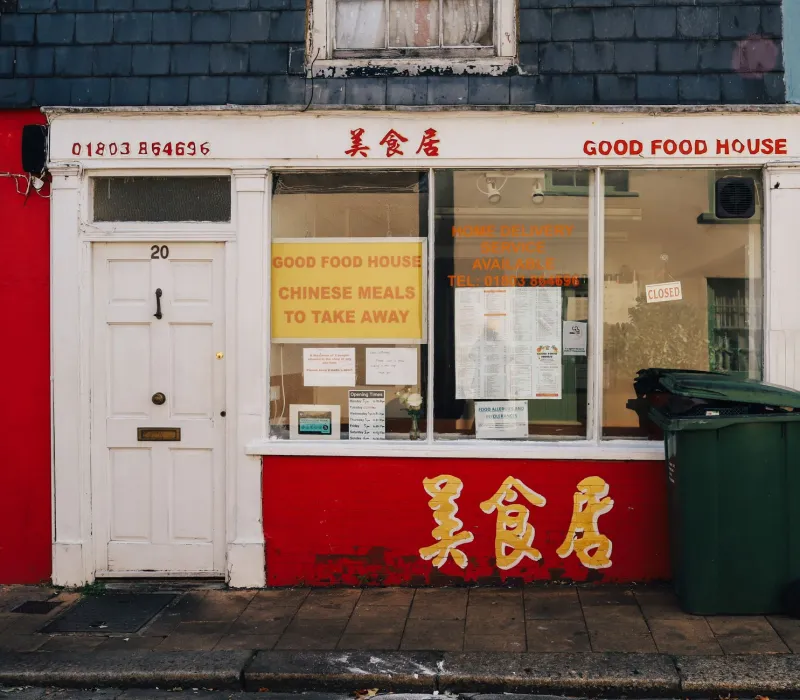
Through the letterbox it comes: a glossy A4 sheet folded twice, or a blurry A5 slip that feels like it was printed in someone's back room. In 2026, when most of us can open an app and see a menu in seconds, the Chinese takeaway flyer should be obsolete. It isn't. Walk around any British town and you will still find them under the doormat, behind the bin store, or pinned to the fridge with a magnet from a plumber who retired years ago.
The flyer is not pure nostalgia. It is a local audit you can do at the kitchen table. A takeaway that bothers to print and deliver one is telling you something about how it sees its patch — and a badly designed flyer is not automatically a warning about the food. You just need to know which bits to read.
Why paper still lands in 2026
A QR code is cheap, but it asks for a small leap of faith. The flyer asks for nothing except a glance. It reaches people who are not scrolling, people who have not downloaded the app, and people who want to order by phone without opening a browser. For a small kitchen, a door drop is still one of the few bits of marketing that lands in a physical place rather than a feed.
That does not make every flyer good. Some are delivered months after the prices changed. Some advertise a website that no longer exists. But the format itself is not the problem. The flyer is a trailer, not the film. Treat it as a prompt to check the listing, not as the final word.
The numbering system is not random
British Chinese takeaway menus love a number. Number 47. Number 48. Number 49. Then, for no obvious reason, number 52. To a tourist, this looks like chaos. To a regular, it is a shorthand that makes a phone order possible in under a minute.
The gaps are usually not sinister. They are the fossil record of a menu that has been edited, reprinted and edited again. Dishes come off, new ones go on, and the numbering is left alone because customers already know their order by number. If the flyer has handwritten additions or a sticker with new prices, that can be a good sign: someone is still paying attention. If the numbering jumps around wildly and the prices look like they belong to a different decade, ring and check before you commit.
What the duck photo is really telling you
There is a particular kind of Chinese takeaway flyer photography: a roast duck that has been photocopied so many times it looks like a shadow, a plate of chicken balls arranged with the enthusiasm of a school prospectus, and a border of red and gold that has been reused since the menu was first typed. It is easy to laugh at. It is also completely normal.
A flyer with modest, slightly battered photography is often a flyer from a kitchen that spends its money on ingredients rather than graphic design. A flyer with a slick, over-produced look is not automatically better either. It might be a chain, or it might be a local takeaway that has paid for a template. The useful question is not 'does this look professional?' but 'does this tell me what I need to know?' Can you see the set meal contents? Are the portion sizes implied? Is there a phone number that matches the address?
Typos are not a food safety rating. A missing apostrophe in 'chicken balls' tells you nothing about the wok. But vague promises do. If a flyer says 'free prawn crackers over £25' and does not say whether that is before or after delivery, ask. If it advertises a 'special set meal' without listing what is in it, that is not a mystery worth solving on a hungry Friday night.
The small print that actually matters
Most flyers bury the useful details at the bottom. Look for the delivery radius, the minimum order, the collection discount, and whether card payments are accepted. A flyer that says 'cash only' in 2026 is not a scandal, but it is a practical detail you want before the driver arrives. A flyer that lists a delivery charge but no minimum order is often more honest than one that promises 'free delivery' in large letters and adds a service fee later.
Allergen information is rarely complete on a paper menu. That is not unique to Chinese takeaways, but it matters. If you have a serious allergy, use the flyer as a starting point and speak to the kitchen directly. The same goes for opening hours: a flyer can be a year out of date and still look perfectly fresh.
How a local reads one
First, match the address and phone number to the takeaway's online listing. If the flyer points to a different location or a number that rings out, that is your answer. Second, compare three prices: the flyer, the delivery app, and the price you get by ringing directly. They are often not the same, and the difference is not always a con. Apps take a cut; collection discounts exist for a reason.
Third, look for the dishes that are not on the app. Lunch deals, collection-only specials, and 'ask about our set meals' are the kind of things that live on paper because they are too fiddly to update online. Finally, order one dish you know and one you don't. A flyer is a local business introducing itself. You do not have to marry it on the first date.
The recycling bin test
Keep one flyer. Recycle the rest. If the one you keep is out of date, ring and ask for the current menu. If the QR code on it goes to a dead page, that tells you something about maintenance, but not everything about the food. The flyer is not sacred. It is a leaflet. But it is also a small, stubborn piece of local life that still works — as long as you read it like a regular rather than a tourist.