Your Postcode Is in the Sauce: A Regional Field Guide to Chinese Takeaways
Walk into a Chinese takeaway in Cardiff, order the house special, then do the same in Sheffield, Leeds, Glasgow or Aberdeen. The laminated menu may look familiar: the same four columns, the same reliable photographs of sweet-and-sour balls, the same slightly mysterious “special curry”. But order the thing the locals order and a different map starts to appear.
British Chinese takeaway food is often talked about as one national cuisine: a greatest-hits list of Cantonese-inspired dishes, filtered through chip-shop economics and Friday-night habit. That is only half the story. The real menu is regional, and not just because one shop uses a bit more garlic. Historical migration, local suppliers, neighbourhood tastes and the simple fact that every town has its own idea of a “special” have shaped what lands in the foil tray.
The menu is national; the specials are local
The national menu is the safe harbour. Sweet and sour chicken, beef in black bean sauce, egg fried rice, spring rolls, prawn crackers: these are the dishes that make a takeaway recognisable from Land’s End to Lerwick. They are also the dishes most likely to be bought in by suppliers, portioned and priced in a fairly predictable way.
The regional menu is where things get interesting. It lives in the “house specials”, the set meals, the sauces the staff recommend when you ask what they would have, and the sides that never quite make it onto the big national chains’ websites. This is not a secret code, exactly. It is more like a local dialect: recognisably Chinese-British, but with an accent you can place.
Cardiff: curry sauce, chips and a long Canton connection
Cardiff is a good place to start because the city’s Chinese food history is older and more layered than the average high-street menu suggests. Welsh ports and the Merchant Navy created early Chinese communities in Cardiff and Liverpool, and those connections left a long tail of Cantonese-influenced cooking in the city. That does not mean every Cardiff takeaway is a Hong Kong kitchen in disguise. It does mean the local menu often feels comfortable with the older British-Chinese repertoire: roast meats, simple stir-fries, curry sauce with a bit of bite, and chips treated as a legitimate partner rather than an afterthought.
Cardiff also shows how a regional quirk becomes normal. Ask for curry sauce in some parts of Britain and you get a thin, turmeric-yellow gravy; ask in others and it is thicker, sweeter, more like a chip-shop curry with a Chinese accent. Neither is “authentic” in the tourist-board sense. Both are authentic to the shop, the street and the customers who keep ordering them.
Sheffield and Leeds: the chilli-oil creep
Head north and east into Sheffield and Leeds and the menu starts to loosen its collar. The old British-Chinese favourites are still there, but you are more likely to see chilli oil, chilli bean sauce, cumin-spiked dishes and “Szechuan-style” specials sitting alongside the sweet-and-sour comfort food. Some of this is fashion: the last two decades have made spicy Chinese food more visible in UK cities, and students, office workers and food-curious families have followed.
But it is also supply and demand in the literal sense. Regional wholesalers stock what local restaurants buy. If enough kitchens in a city start asking for chilli bean paste, dried chillies and Sichuan peppercorns, those ingredients become easier to get and cheaper to use. A dish that began as a niche special can end up on the takeaway menu as a regular. Sheffield’s spice level is not a moral judgement on Sheffield’s palate. It is a snapshot of who has been cooking, who has been eating and what the local trade has learned to keep in stock.
Glasgow and Aberdeen: north of the salt-and-pepper line
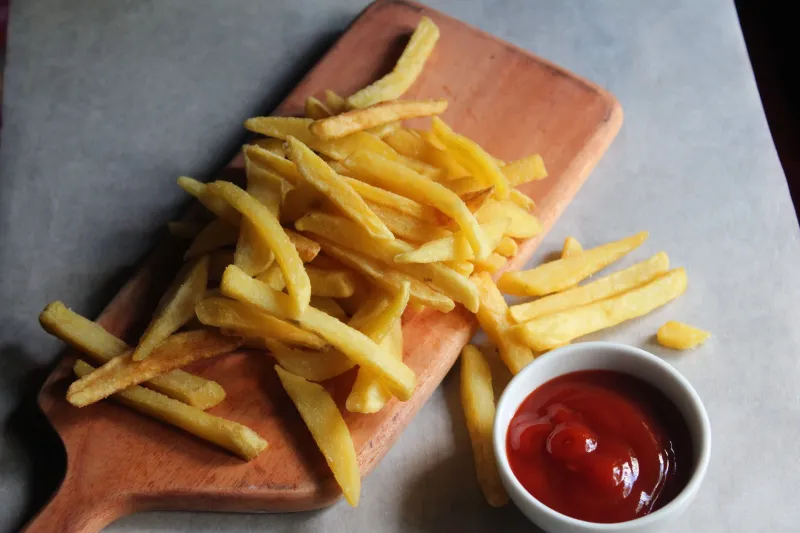
Glasgow deserves its own chapter in any British Chinese food story. The city’s salt-and-pepper chips are not a side dish so much as a civic institution: chips tossed with chopped onion, chilli, garlic and a salty-spicy dust, often served with a tub of curry sauce on the side. The exact recipe varies, but the idea is recognisable across the city in a way that makes a Glasgow takeaway menu feel different from a London one.
Aberdeen adds another layer. Port-city history, a steady student population and a local appetite for battered and fried food all leave marks on the takeaway menu. You will still find the familiar Cantonese classics, but the specials may lean towards generous mixed boxes, crispy shredded chicken and the kind of sauce-heavy dishes that make sense on a cold evening. Regional menus are not just about spice. They are about weather, work and what people want to eat when they get home.
Why the map looks like this
The regional Chinese takeaway menu is the product of several histories overlapping. Migration is the obvious one: Cantonese-speaking communities from Hong Kong and southern China settled in port cities and university towns, then spread outwards. Later arrivals brought different regional Chinese cooking, and British-born customers developed their own loyalties. Supply chains did the rest. A restaurant in a city with a large Chinese wholesale trade can experiment more easily than one in a small town where the cash-and-carry stocks a narrower range.
Then there is the humble local invention. Salt-and-pepper chips, curry sauce, battered prawns, “special fried rice” with everything on top: these are not ancient recipes. They are British Chinese food doing what all food does when it settles somewhere new. It borrows, adapts, simplifies and occasionally invents something that later generations cannot imagine living without.
What the postcode tells us
In 2026, it is still tempting to talk about “the Chinese takeaway” as if it were one thing. But the regional map says otherwise. The same menu format can hide very different kitchens, different suppliers and different local expectations. Cardiff may lean Cantonese, Sheffield may reach for the chilli oil, Glasgow will defend its salt-and-pepper chips, and Aberdeen will do something generous with a mixed box. None of these are less British Chinese than the others. They are all evidence that British Chinese food is not a single national cuisine at all. It is a collection of local ones, served in foil trays and eaten on the sofa.