The Glasgow Accent on a Chinese Menu: How Salt and Pepper Chips Conquered Britain
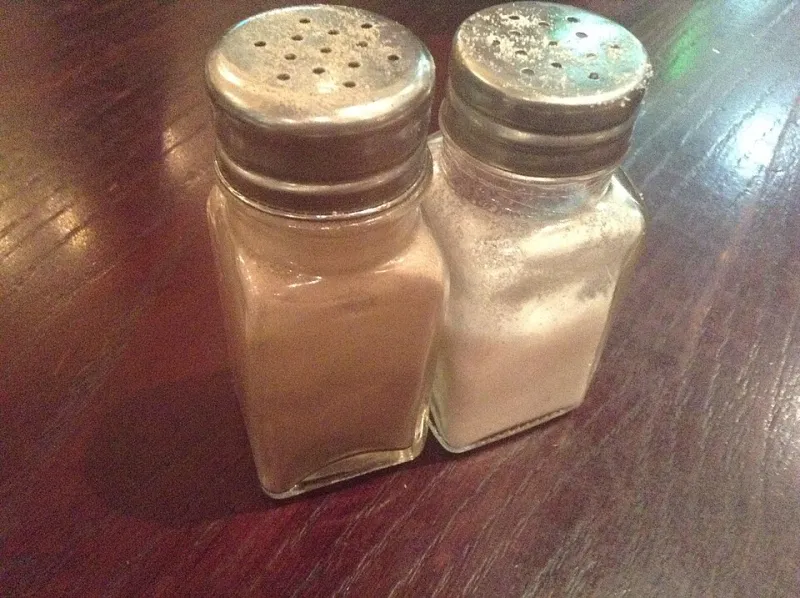
Photo: deavmi, CC BY-SA 4.0, via Wikimedia Commons
There's a specific sound involved in a good portion of salt and pepper chips: the sizzle as the tray hits the counter, the scrape of the wok, the crackle of chilli and onion hitting hot oil. It's the noise of a hundred Friday nights in a hundred British towns. And it started, by most accounts, somewhere in the west of Scotland.
A chip that shouldn't exist
Scottish takeaways had chips. Chinese takeaways in Scotland sold chips. In much of England, a Chinese takeaway would look at you blankly if you asked for them; in Glasgow they sat on the menu next to the curry sauce, because that's how chip-shop culture works north of the border. Once the chips were already in the fryer, it was only a matter of time before somebody tossed them in the same seasoning the kitchen was using for salt and pepper squid.
That's the charm of it. Salt and pepper chips aren't authentically Cantonese and they aren't authentically Scottish. They're the product of two food cultures sharing a kitchen and a queue of hungry people at eleven at night.
Where the salt and pepper style comes from
The wider family — squid, prawns, ribs, wings, tofu — belongs to Cantonese cooking, where a simple mix of salt, white pepper, chilli and aromatics is used to finish deep-fried seafood and meat. In a traditional kitchen the seasoning hits the wok at the very end with garlic, spring onion and fresh chilli, so it blooms in the heat rather than sitting flat on the plate.
The British takeaway version is a louder, more generous cousin. It leans heavily on white pepper — that's the heat you feel at the back of your throat rather than the front — plus salt, MSG or chicken powder, garlic granules and chilli flakes. Some kitchens add five-spice. Some add a pinch of sugar. Almost all of them will tell you the secret is the wok, not the powder, and they're mostly right.
What makes the seasoning actually work
It comes down to three things.
Dryness. Wet chips steam. Steamed chips go soggy. The seasoning needs a rough, dry surface to cling to, which is why a proper double-fried chip works and a limp one doesn't.
Heat. A domestic hob can do this, but it has to be pushed. The pan needs to be properly hot before anything goes in, and the chips need to go in small batches so the temperature doesn't crash the moment they land.
Timing. Aromatics go in last and fast. Garlic burns in seconds; spring onion and chilli want thirty seconds at the end — enough to soften and release their oil, not enough to brown.
The family tree
Once you accept that salt and pepper is a style rather than a dish, the menu starts making sense. Salt and pepper wings, usually fried then tossed. Salt and pepper ribs, sometimes dry-rubbed and fried rather than glazed. King prawns, ideally shell-on. Squid, if you're lucky. Tofu, which takes the coating beautifully. And in Scotland, the munchy box — a pizza box containing a bit of everything, chips included, with a tub of curry sauce for dipping. It is not a restrained piece of food.
Regional variations you'll recognise
- Glasgow and the west of Scotland — the benchmark. Heavy on onion, generous with chilli, chips usually a shade chunkier, and a curry sauce on the side whether you asked for one or not.
- Edinburgh and the east — often a touch milder and more five-spice led, with more green pepper in the mix.
- Northern England — garlic-forward, frequently with visible chunks of onion and green pepper, and a tendency towards a slightly wetter toss.
- The Midlands — a version that leans sweeter, sometimes with a sachet of extra seasoning thrown in the bag.
- London and the south — the polished end of the spectrum: thinner chips, fresh red chilli, spring onion cut on the bias, and a menu that will charge you extra for the privilege.
Which one is best is a pub argument rather than a fact. The version you grew up with usually wins.
Doing it at home on a normal hob
You don't need a commercial burner. You need a heavy pan, a bit of patience, and the willingness to cook in batches.
Get your chips properly crisp first — air fryer, hot oven, or a double fry if you're feeling committed. Then get your heaviest frying pan or wok screaming hot, add a thin film of oil, and tip in a batch of chips with a good tablespoon of the seasoning mix. Toss constantly for a minute or so, until the chips look dusty and smell faintly of white pepper. Add sliced onion, red chilli and a big handful of spring onion, toss for another thirty seconds, then get the whole lot out of the pan and onto a plate before the garlic catches.
A word on the seasoning itself: two parts salt to one part white pepper, then garlic granules, a little MSG if you keep it, chilli flakes and a pinch of five-spice. Taste it on a single chip before you commit the whole batch.
And make more than you think you need. Everyone does this, and everyone is still surprised.